"Karina took the time to understand our family's situation before recommending anything. The estate plan she put together gave us real peace of mind."
MGMaria G.
Miami, FL
Create a clear estate plan that protects your wishes, your family, and your assets with guidance from an experienced wills and trusts attorney.
featured on








"Karina took the time to understand our family's situation before recommending anything. The estate plan she put together gave us real peace of mind."
"I was facing a complicated tax matter and didn't know where to start. KVasquez Law gave me a clear plan and walked me through every step."
"Finally, a tax attorney who speaks plain English and Spanish. She explained everything without the legal jargon."
"KVasquez Law helped me get my estate plan in order after years of putting it off. Clear process, no pressure, and everything was explained in plain language."

A will and a trust are the foundation of any well-built estate plan. Together they determine what happens to your assets, who is responsible for carrying out your wishes, and how your family is protected after you are gone. Without them, Florida law makes those decisions for you and the process of settling your estate becomes more complicated, more public, and more costly for the people you leave behind.
KVasquez Law advises individuals and families in Miami on wills, trusts, and the full range of estate planning documents that give you control over your legacy. Karina reviews your assets, your family structure, and your goals before recommending any document or strategy, and prepares everything personally so your plan reflects exactly what you intend.
A will is the foundational document of your estate plan. It directs how your assets are distributed after you pass, names a personal representative to administer your estate, and if you have minor children, designates a guardian for them. Key points:
A revocable living trust allows you to transfer assets into a trust during your lifetime while retaining full control over those assets as the trustee. At your death, the assets pass directly to your named beneficiaries without going through probate. Key points:
Unlike a revocable trust, an irrevocable trust generally cannot be amended or revoked once established. In exchange for giving up that control, irrevocable trusts offer benefits that revocable trusts do not, including asset protection from creditors and removal of assets from your taxable estate. Common irrevocable trust structures include:
Healthcare directives document your medical wishes and designate someone to make healthcare decisions on your behalf if you cannot speak for yourself. Florida recognizes two primary documents:
A durable power of attorney authorizes a trusted person to manage your financial and legal affairs if you become incapacitated. Without one, a court-supervised guardianship proceeding may be required to appoint someone to act on your behalf, which is time-consuming and costly for your family. Key points:
Estate planning documents are only as effective as the care taken in drafting them. A will or trust that is improperly executed, internally inconsistent, or out of date with your current circumstances can create problems for your family at exactly the moment they are least equipped to deal with them.

Florida has specific execution requirements for wills and trusts. A document that does not meet those requirements may be challenged or invalidated. KVasquez Law prepares estate planning documents that are legally sound, clearly drafted, and properly executed so they hold up when they matter most.
A will, a trust, powers of attorney, healthcare directives, and beneficiary designations on financial accounts and insurance policies all need to work together as a unified plan. KVasquez Law reviews the full picture and makes sure every component is aligned so nothing falls through the gaps.
Blended families, minor children, beneficiaries with special needs, significant assets, closely held business interests, and multi-state or international assets all require planning that goes beyond a standard template. KVasquez Law builds plans around the specific realities of your life and family.
An estate plan drafted five or ten years ago may not reflect your current assets, family structure, or intentions. KVasquez Law advises on when your plan should be reviewed and updated so it continues to serve its purpose as your life evolves.
Many clients benefit from having both. A revocable living trust handles the distribution of assets held in the trust and avoids probate for those assets. A pour-over will captures any assets not transferred into the trust during your lifetime and directs them into the trust at death. Whether you need both depends on your assets, your family structure, and your goals. KVasquez Law advises on the right combination for your situation.
Assets not transferred into your trust during your lifetime are subject to probate and distributed according to your will or, if you have no will, according to Florida's intestacy laws. A pour-over will can direct those assets into your trust at death, but they will still go through the probate process first. Proper trust funding during your lifetime is essential to getting the full benefit of a revocable trust.
A will can be amended through a codicil or replaced entirely with a new will at any time while you have legal capacity. A revocable living trust can be amended or revoked at any time during your lifetime. An irrevocable trust generally cannot be changed once established, which is why the terms must be carefully considered before it is created.
A valid Florida will must be in writing, signed by the testator, and witnessed by two individuals who sign in the presence of the testator and each other. Florida also recognizes self-proving wills where the testator and witnesses sign an affidavit before a notary at the time of execution. Holographic wills, meaning handwritten wills without witnesses, are not valid in Florida.
Yes. Estate planning is not only about wealth transfer. A healthcare directive, a healthcare surrogate designation, and a durable power of attorney are relevant for every adult regardless of age or asset level. If you become incapacitated without these documents in place, your family may need to go to court to obtain authority to act on your behalf.


Your estate plan should reflect your wishes, protect your family, and hold up when it matters most. KVasquez Law advises individuals and families in Miami on wills, trusts, and the full range of estate planning documents with direct, personalized guidance from attorney Karina Vasquez.
Phone
(305) 359-7522
legal@kvasquezlaw.com
Office Address
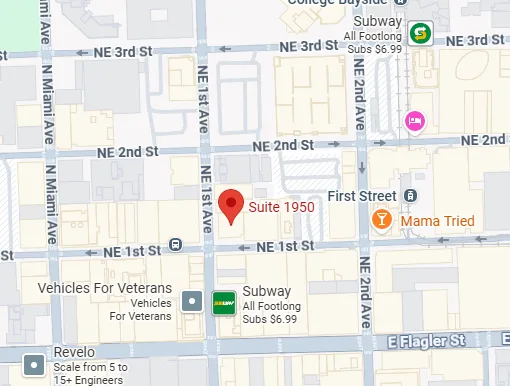
1200 Brickell Avenue, Suite 1950, Miami, FL 33131